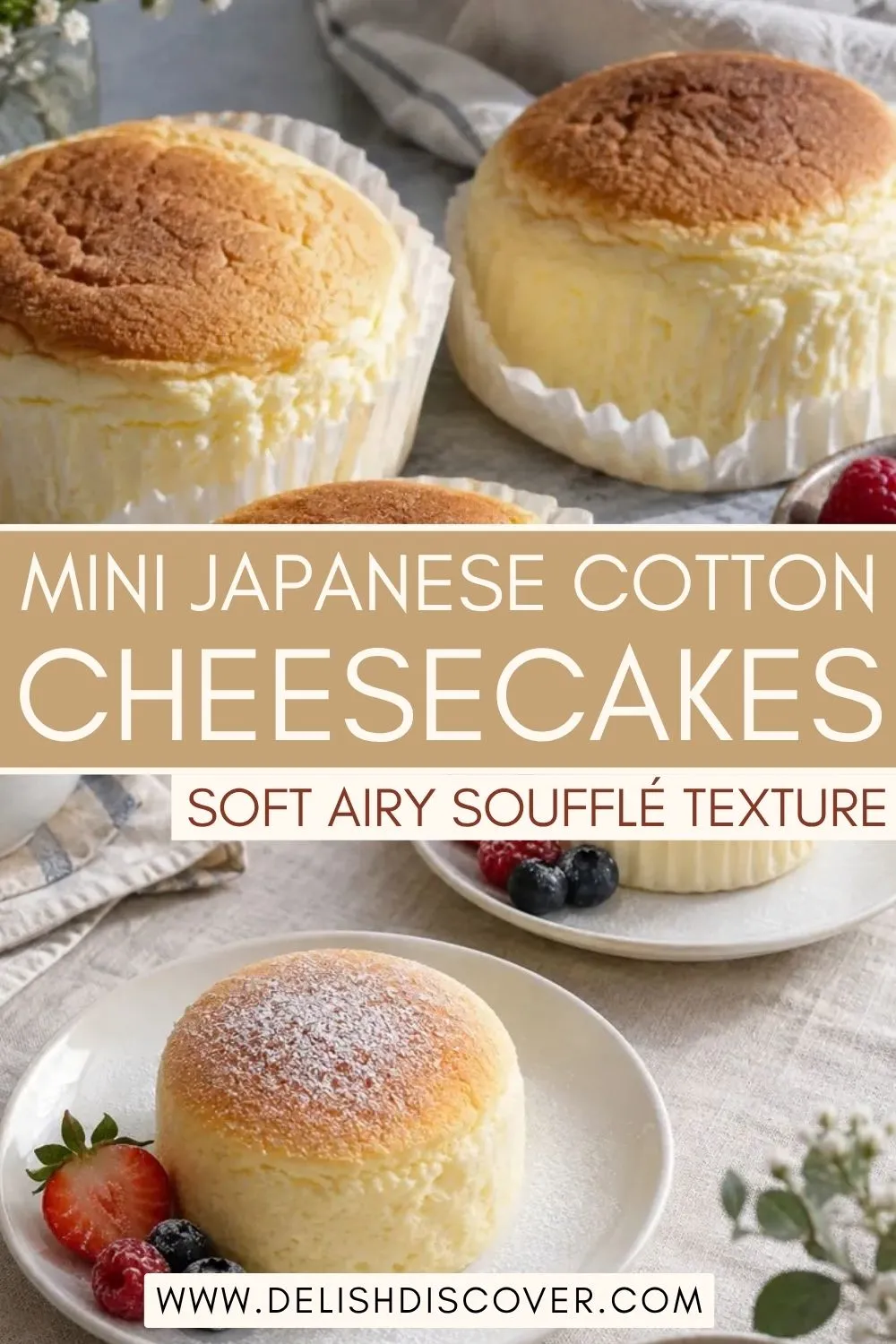

Mini Japanese cotton cheesecakes are small, baked cream cheese cakes with a soft, airy crumb. This version makes 12 in a standard lined muffin tin, so each guest gets an individual cake without slicing a larger cheesecake.
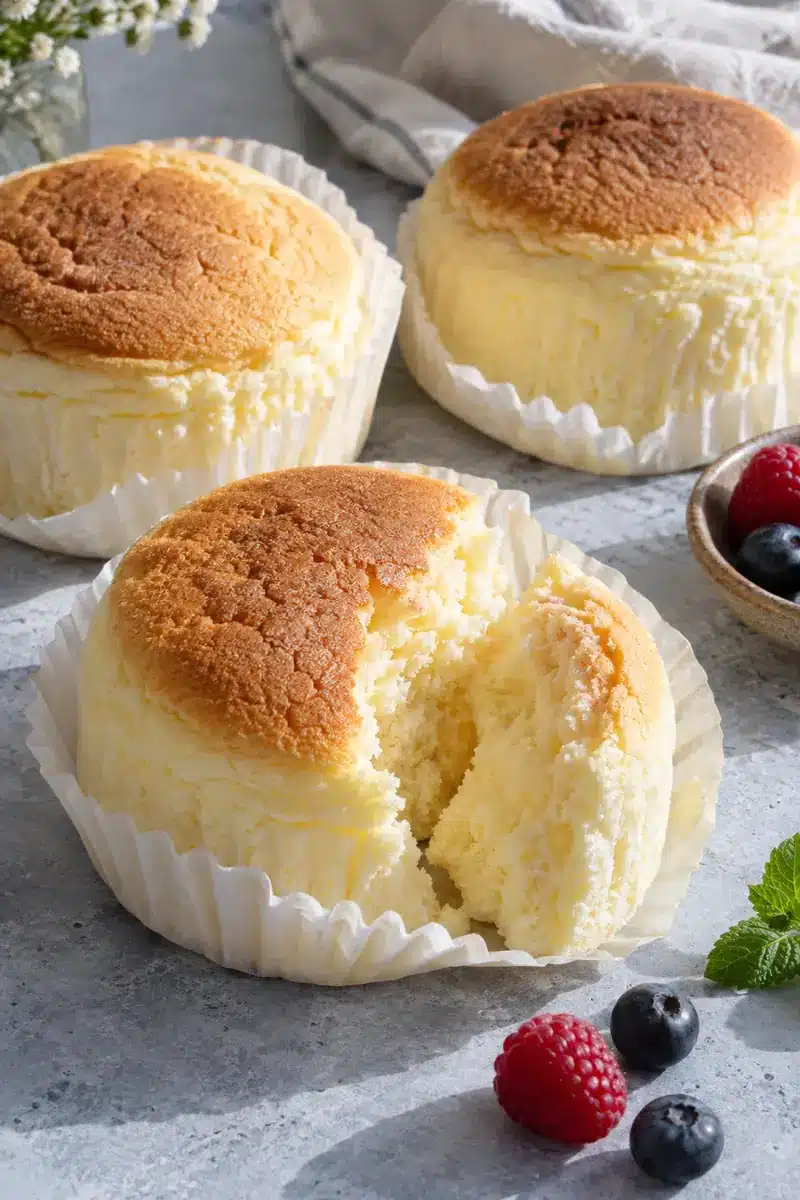
The lift comes from whipped egg whites folded into a smooth cream cheese base. A shallow hot-water bath moderates the oven heat, while a short rest in the switched-off oven helps the cakes settle gently. They will shrink a little as they cool; that is normal for a soufflé-style cake. For the full-size technique behind this style, see Just One Cookbook’s Japanese cheesecake guide.
Table of Contents
What Makes Japanese Cotton Cheesecake Different?
A conventional baked mini cheesecake is creamy and compact. These cakes use meringue for much of their structure, making the crumb lighter and more sponge-like while keeping a mild cream cheese tang. There is no crumb crust. If you want a denser baked bite with a fruit topping, Mini Apple Cinnamon Cheesecakes offer that direction.
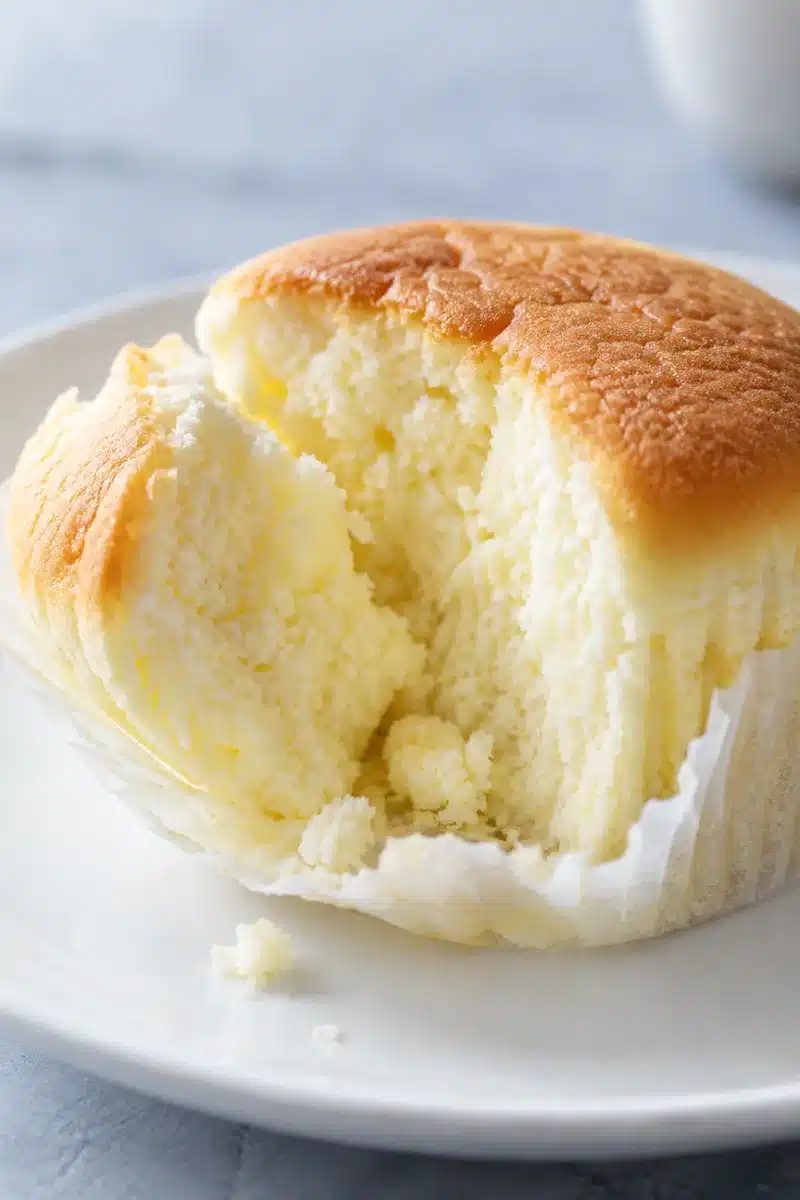
Mini Japanese Cotton Cheesecakes
Ingredients
Equipment
Method
- Heat the oven to 300°F (150°C) with a rack in the center. Line a standard 12-cup metal muffin tin with paper liners. Set the muffin tin in a roasting pan large enough to hold it flat. Heat water for the bath.
- Set a heatproof bowl over a saucepan of barely simmering water. Add cream cheese, butter, and milk. Whisk until melted and completely smooth, then remove the bowl and cool the mixture until just warm, about 5 minutes.
- Whisk in the egg yolks and lemon juice. Sift the cake flour and cornstarch over the bowl, then whisk gently until smooth with no dry pockets.
- In a clean, dry bowl, beat the egg whites and cream of tartar until foamy. Add the sugar a spoonful at a time while beating. Stop at glossy firm peaks with tips that curl over.
- Stir one third of the meringue into the cream cheese base to loosen it. Fold in the remaining meringue in two additions with a spatula, turning the bowl and lifting batter from the bottom. Stop when no white streaks remain.
- Divide the batter among the 12 liners, filling each about ¾ full. Place the roasting pan on the center rack and carefully pour hot water into the roasting pan only, about ½ inch deep around the outside of the muffin tin. Keep water out of the wells and liners.
- Bake for 22–28 minutes, until the tops are pale golden and set and each center has a small, unified wobble when the pan is nudged. If a center looks wet or sloshes, bake a few minutes longer. Avoid opening the oven during the first 20 minutes.
- Turn off the oven and crack the door open. Rest the cakes inside for 15 minutes. Carefully lift the muffin tin out of the water bath and set it on a rack for 10 minutes. Lift the cakes from the tin and cool on the rack for about 20 minutes more. Serve with optional powdered sugar or berries, or refrigerate once cool.
Notes
- Cover and refrigerate at 40°F (4°C) or below within 2 hours of baking (1 hour above 90°F). Use within 3 days for best quality.
- Bake time is 22–28 minutes; the 25-minute card value is an estimate. Gradual cooling takes 45 minutes. Total time is approximately 92–98 minutes.
Ingredients and Equipment
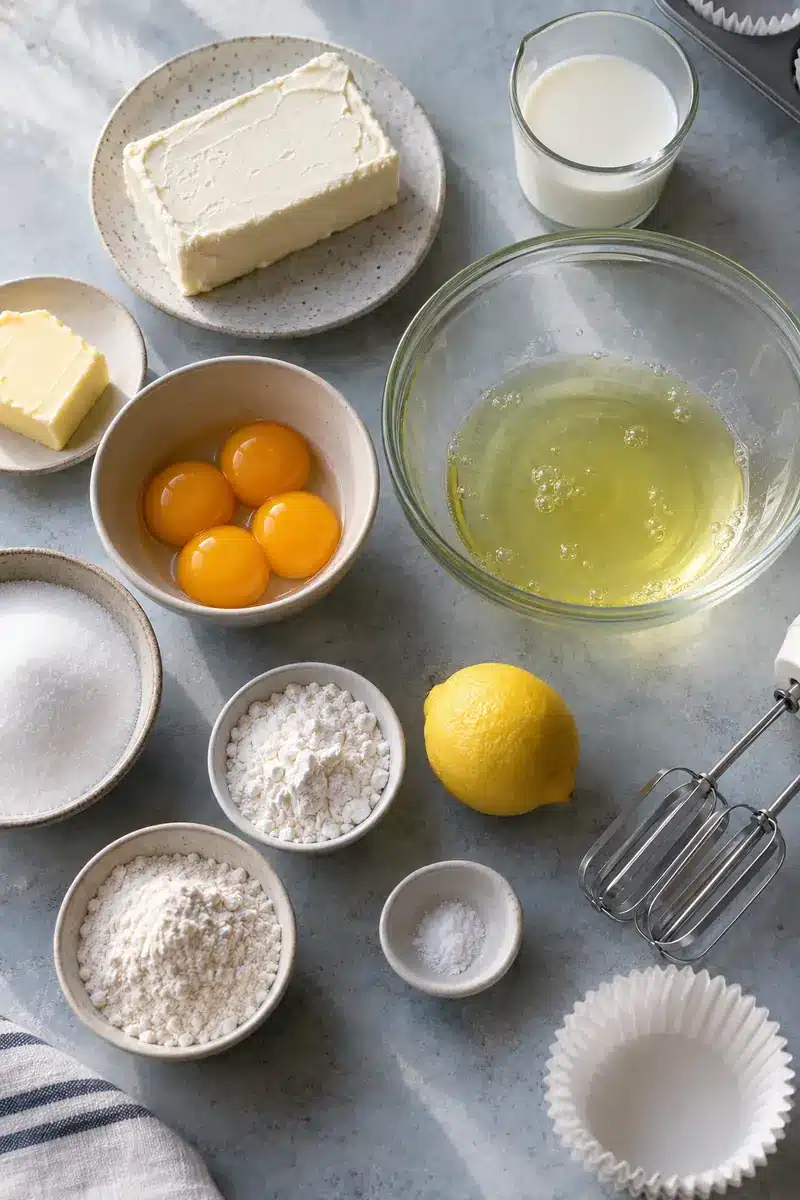
Full-fat block cream cheese brings flavor and body. Butter and whole milk loosen the base so the flour can blend in smoothly. Cake flour and a little cornstarch help the cakes hold their rise without a heavy crumb. Egg yolks enrich the base; egg whites and sugar form the foam that gives a mini Japanese soufflé cheesecake its lift. Lemon juice brightens the flavor, and a little cream of tartar helps the whites whip steadily.
Use a standard 12-cup metal muffin tin, with wells about 2¾ inches across the top and 1¼ inches deep. Line all 12 wells with standard paper liners that have roughly 2-inch bases and 1¼-inch walls. You will also need a roasting pan large enough to hold the entire muffin tin flat, a hand or stand mixer, a heatproof bowl, a fine sieve, and a flexible spatula. These pan and liner sizes are the ones used in the recipe card.
Setting Up the Individual Pans and Water Bath
Set the lined muffin tin inside the empty roasting pan on the center oven rack. After filling the cups, pour hot water into the roasting pan only, to a depth of about ½ inch around the outside of the muffin tin. The water stays well below the muffin wells; it never goes into the paper liners or batter. Use a solid metal muffin tin and pour slowly at a corner of the roasting pan so splashes cannot reach the cakes.
What the Meringue Should Look Like
Beat the whites with cream of tartar until foamy, then add the sugar gradually. Stop at glossy firm peaks: when you lift the beaters, a peak stands and its tip bends over. A loose, flowing foam will not support the cakes; a grainy, broken-looking foam is overbeaten and harder to fold. This peak cue applies to this recipe’s method throughout.
How to Make Mini Japanese Cotton Cheesecakes
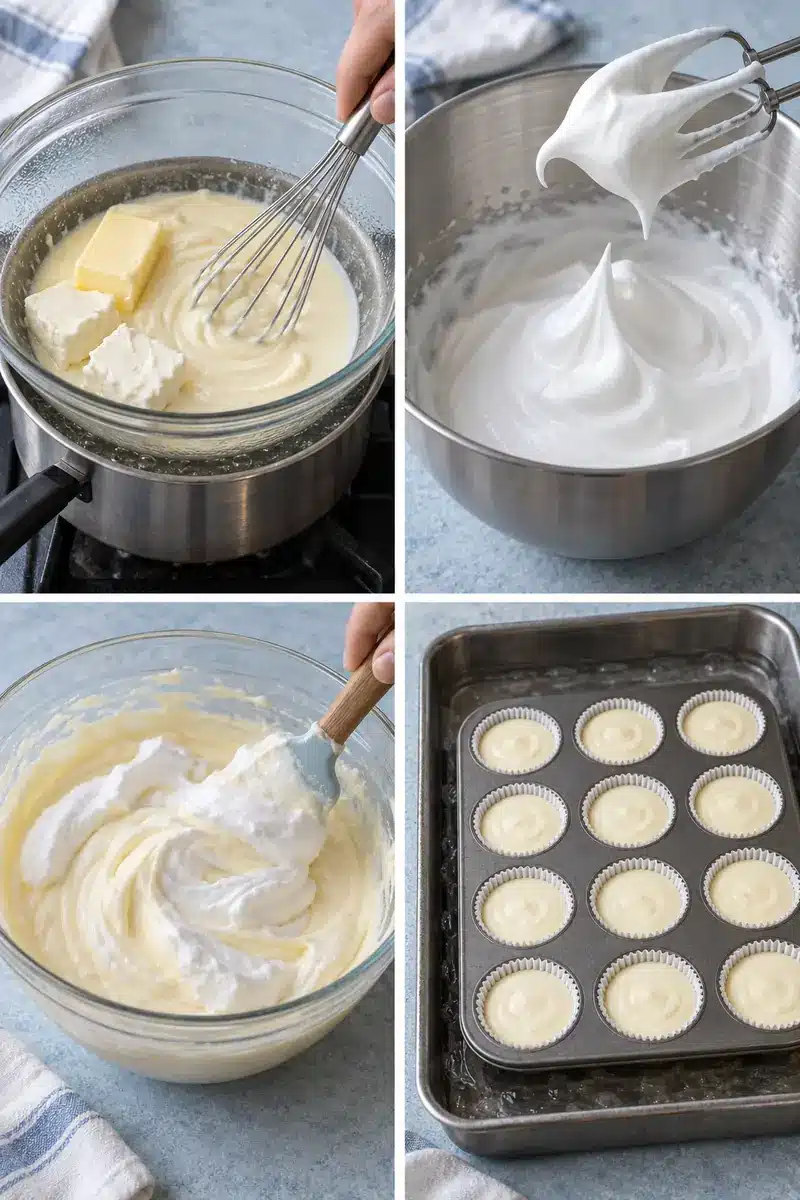
Make a smooth cheese base, fold in glossy meringue, then fill, bake and cool gently.
Total time: 1 hour and 35 minutes
-
Mix the Cream Cheese Base
Warm cream cheese, butter, and milk gently until smooth, then let the mixture become just warm before whisking in the yolks. Sift in the cake flour and cornstarch and whisk until there are no flour pockets. The base should fall from the whisk in a smooth ribbon, with no cheese lumps.
-
Whip and Fold the Egg Whites
Whip to the glossy, curled-tip firm peaks described above. Stir about a third of the meringue into the cheese base to lighten it. Add the rest in two batches, sweeping a spatula down through the center and up the side while turning the bowl. Stop when no white streaks remain; vigorous stirring squeezes out the bubbles that make fluffy mini cheesecakes.
-
Fill, Bake, and Cool the Cakes
Divide the batter evenly, filling each liner about ¾ full. Bake at 300°F (150°C) for 22–28 minutes in the shallow water bath. Look for pale golden, dry-looking tops and a small unified wobble at the centers; a wet, sloshing center needs more time. Switch off the oven, crack the door, and leave the cakes inside for 15 minutes. Lift the muffin tin from the water, cool it on a rack for 10 minutes, then lift the cakes from the tin and cool on the rack for about 20 minutes more. A little settling is expected.
Why They Sink, Crack, or Turn Dense
| Problem | Possible cause | What to do next time |
|---|---|---|
| Deeply sunken centers | Centers were still wet, or the hot cakes met a sudden temperature change | Bake until the center moves as one piece, then use the 15-minute oven rest. |
| Cracked or dark tops | Oven heat was too fierce or water bath ran dry | Check the oven temperature and keep about ½ inch of hot water around the tin. |
| Heavy, tight crumb | Whites were underwhipped or the finished batter was overmixed | Use glossy curled-tip firm peaks and stop folding as soon as the streaks disappear. |
| Damp paper bottoms | Water splashed into the wells | Pour at the roasting pan’s corner and keep the bath below the muffin cups. |
Serving, Make-Ahead, and Storage
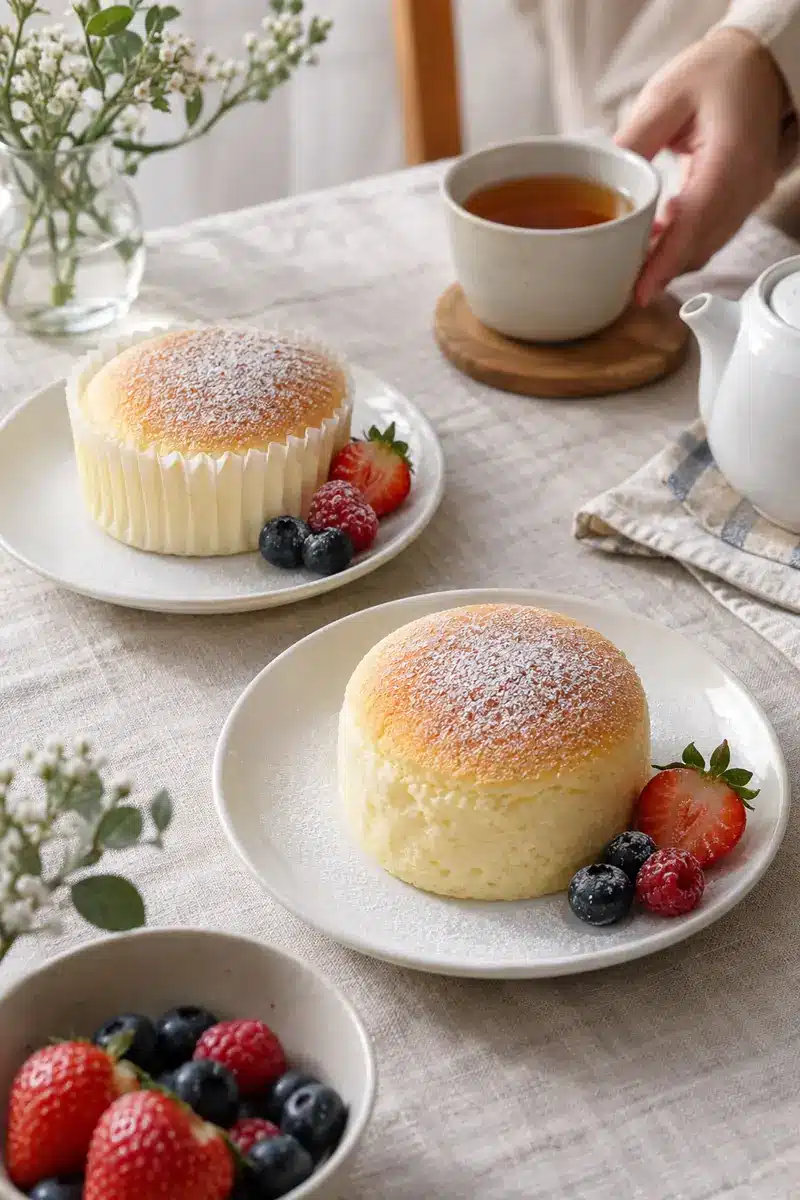
Serve plain, with a light dusting of powdered sugar, or with a few berries added just before serving. The cakes are especially delicate while warm; for neat liner removal, chill them first. For make-ahead serving, cool as directed, cover, and refrigerate. The texture becomes slightly firmer when cold; let a cake stand for 10–15 minutes before serving if you prefer a softer bite.
Keep the cakes covered in the refrigerator at 40°F (4°C) or below and use within 3 days for best quality. Refrigerate them within 2 hours of baking, or within 1 hour if the room is above 90°F (32°C), following FoodSafety.gov’s refrigeration guidance. Keep any fruit topping separate until serving.
Frequently Asked Questions
Save These Mini Japanese Soufflé Cheesecakes